Children of Heaven is a 1997 Iranian film by Majid Majidi. It centers around a brother and sister and their adventures over a lost pair of shoes. Ali loses his sisters shoes in the beginning of the film and after telling his sister, the two decide to keep it a secret from their parents to avoid getting into trouble. The two decide to split Ali's shoes between the each other.Zahra will wear them to school in the morning and hand them off to Ali at noon so he can attend afternoon classes. Hilarious hijinks ensue as the two continue on with the secret despite how inconvenient it is.One day, Zahra sees her missing shoes on the feet of a classmate and follows her to her house. It is here that she realizes that the girls' father is blind. Soon after, the two become friends. Towards the end of the movie, Ali enters a race where 3rd place receives a pair of shoes. Thus, he tries his best to get third. However, he accidentally places 1st and gets the rand prize. He is very saddened by this. Zahra appears disappointed by this and the movie cuts to their father riding a bike...and on the back are two new pairs of sneakers.
I think the major theme of the film is perseverance. At least on Ali's part. He spends the entire movie running to class and always being late. He never stops, no matter how late he will be or is. And when he is stopped in his tracks he still continues on. I mean this literally and figuratively. Towards the end of the film, he uses his running for competition and tries his best to place 3rd. But alas, he gets 1st. His idea of victory not being in line with theirs makes him brutally sad either way.
I really liked this movie. It was one of the most fun movies I feel we had seen all year. Ali is a character we can all look up to. No matter how old we are compared to him. His sister also had admirable characteristics as well; she finds the girl who has her shoes and does noting about it. And when I say 'nothing' I mean, she didn't get angry or confrontational. Instead, they became friends. The whole movie was really good, from start to finish. It was fun and thoughtful at the same time, which most movies cannot execute nowadays.
Sunday, May 9, 2010

Eat Drink Man Woman

Eat Drink Man Woman is a 1994 Taiwanese film directed by Ang Lee.
The movie is about a semi-retired and widowed Chinese chef and his family. At the start of the film, he lives with his three single daughters. One is a teacher, one is a business woman and one is a college student. As the film goes on, each daughter becomes involved with a man and moves out of the house. All except the oldest daughter who coincidentally had the most difficult relationship with her father.
The major theme of the film is necessity. Eat....we need food to live. Drink...we need to drink....the last two, Man and Woman...are what shape the film. Before becoming engaged to a man, the two women seem to lead a hollow existance. They were living, but it just seemed as though something was missing. They finally move on however, when they get involved with men. And I guess the same thing can be said about the men...especially the boy the college going daughter meets. He leads a hopeless life until he becomes involved and in love with her.
I thought the movie was very good, and very comical. The title and theme were are my favorite parts of the movie. I love metaphors and symbology and this movie was filled with both. It focuses heavily on mortality, and the steps to be taken so as not to squander that mortality. I don't necessarily agree that companionship is needed to survive...but I can see where the message spawns from. Ang Lee is a very talented director and very well rounded.

Bad Education
Bad Education is a 2004 Spanish film directed by Pedro Almodóvar. It tells the story of two reunited childhood friends/lovers; Enrique who has become a film director and Ignacio who is an actor. Ignacio comes to Enrique six years later with a story he would like for him to turn into a film. The story is based on their childhood. Enrique decides to make his story into a movie and the plot unfolds through both the present, flashbacks and the production of Ignacio's short film. The story is primarily based on Ignacio's molestation that he sustained at the hands of their Catholic school teacher, Father Manolo. As production continues, Enrique stumbles upon a murder mystery.
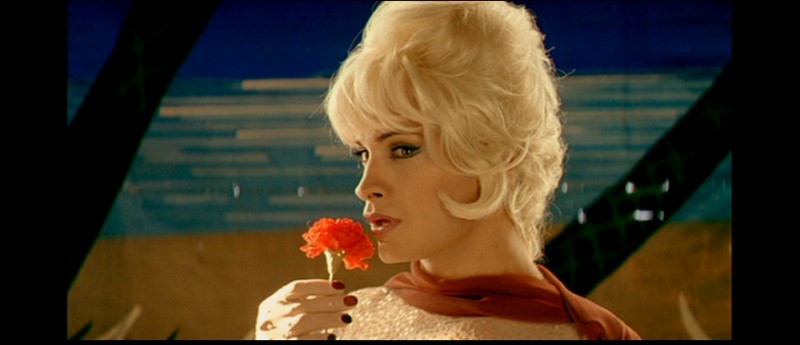
The film is filled with several major themes including sexual abuse by Catholic priests, transsexuality and drug abuse. When the film starts, we are keyed in on the sexual abuse by Father Manolo. The unjust nature of it all is covered greatly and in length. Father Manolo will stop at nothing to stop Ignacio from informing the public of the molestation. For years and years, Manolo pays for his transexual surgeries in exchange for his silence and to be near him. Transsexuality is what drives the character of Ignacios greed. In the present, Ignacio/Juan wants to play the part of Zahara, the transsexual lead in his story being adapted by Enrique, but Enrique scoffs at this notion. Juan however, is not so easily dissuaded and constantly requests that he get the part. Ignacio's character does plenty of drugs and eventually overdoses the day he decides to quit. I guess 'greed' in itself is also a major theme in this film. Everyone wants something in the movie. Manolo wants Ignacio, Ignacio wants money/drugs, Enrique wants the next big story and Juan wants fame and money.
I thought the movie was good. Except that it was a little confusing and the twist seemed somewhat forced. It felt like it came out of left field....out of nowhere. I let it grow on me though and it honestly makes the film 10x more interesting. I mean, it was intriguing to begin with, but now you're sitting there trying to figure out the brothers motives for doing everything he has done. I thought the production value was really good and enjoyed the camera angles. Intertwining multiple stories to form one will always be a risky thing to do, but I liked it. Even though, like I said earlier, I was confused. I'm not surprised it took ten years to write this script.
Thursday, May 6, 2010
Amores Perros

Amores Perros is a Mexican film directed by Alejandro González Iñárritu. The movie is 153 minutes long and contains three different stories, which, at some point, link all characters briefly in the same exact car crash. The film was nominated for the Academy Award for Best Foreign Language Film in 2000 and won the Ariel Award for Best Picture from the Mexican Academy of Film. It is dubbed by many as the 'Mexican Pulp Fiction'.
The first story is about Octavio who we find out has feelings for his sister in law who lives with him, his ill tempered brother and is mother. Octavio begins entering their dog into dog fights after it manages to kill one of the toughest dogs after being jumped by it on the streets. Octavio makes a lot of money and begs Susana, his brothers wife, to run away with him. His advances are ignored left and right. Octavio continues to win games. Most of them against the owner of the first dog his dog beat who continues to try and beat Octavio with new dogs but fails. In a private match however, he kills Octavios dog by shooting him. Before leaving, Octavio stabs him and gets into a high speed chase which ends up with him and his friend crashing into someones car.

The second story is about a man who works for a magazine who seems happily married with a wife and kids. The home continuously gets calls and whenever the wife answers the phone there is no one on the other end. Soon, we find out, that Daniel is having an affair. He eventually leaves his wife after spending a fortune on a new apartment to movie in with his mistress, Valeria, a very popular model whose ad stretches alongside a building that can be seen from their new apartment window.
The two are extremely happy.
Until Valeria gets into a car accident with Octavio and has to get surgery. Surgery goes fine and she goes home. One afternoon, while playing fetch in the apartment, her dog falls into a hole in the floor. She is worried for him, but Daniel thinks he will find his own way out. Valeria is stuck at home with nothing to do and gets restless. She also feels that Daniel doesn't care about her or the dog. Mysterious phone calls begin to be made to the house which makes her suspicious. The two are in a loveless relationship which ets even worse when Valeria must lose her leg to avoid gangrene. Her career as a model is over. And the ad alongside the building across the street gets taken down.
In the third story, El Chivo is a homeless man who cares for stray dogs and is a hit ma who wishes to visit the daughter he left behind years ago. He witnesses the collision and steals Octavios dog to take care of him. Back at his place, we find out that he has at least half a dozen dogs already which he loves and cares for. He leaves Octavios dog alone with them while going out on business and comes back to find all his others dogs slaughtered. Octavios dog has killed them all and El Chivo is greatly saddened by this. Throughout the film, he takes on a few jobs until he gets one which involves killing a mans brother/lover. He lets the two fight amongst themselves after tying them up in his dwelling. He sells a truck and walks out into the distance with Octavios dog, who he now calls blackie.
I think the movie is filled with themes from left and right. But the MAJOR theme is cruelty against one another. Octavio and his brother always get into physical conflicts. Daniel and Valeria HATE one another, and Daniel just ended his long relationship with his wife to be with her. El Chivo seems like a nice guy, but he kills people for a living. When he retrieved Octavios dog from the crash, he stole money from his dead friend instead of pulling either one of them out of the car. Blackie kills his fellow hounds. Not just one or two of them, but all of them.
The film also covers the hierarchy of the social class. Octavio is lower class, Daniel and Valeria are upper class and El Chivo is at the poverty level...he's homeless. All of them however, still showcase the same amount of cruelty and emotional distress. Each of them are 'broken'. And a car crash ties them together for a brief moment.
I think the movie was very good. 153 minutes was necessary to get everything across. this was the second time I have seen this movie and I didn't mind sitting through it. The only problem I had with it was the subtitles. From the title to the dialogue, Engish viewers are practically being lied to. But, alas, that is not the fault of Alejandro González Iñárritu. Who has delivered on an excellent film that concludes with a not so Hollywood ending and that is always a plus in my book.
Monday, April 12, 2010
La Femme Nikita
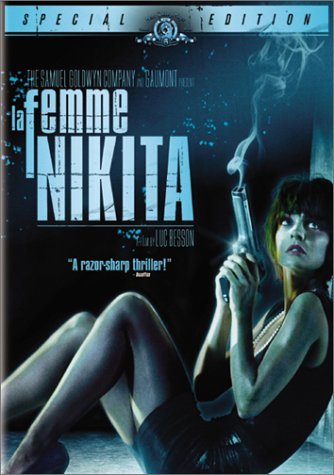
Nikita Taylor (Anne Parillaud) is a heroin addict who participates in robbing the pharmacy of the parents of a fellow junkie. The theft goes wrong and escalates into a gunfight with the police and the deaths of all her partners. After all has subsided, a very inebriated Nikita shoots a policeman. She is arrested and then convicted of murder and imprisoned for life. In prison, she is drugged to simulate a death sentence and then awakens in a nearly featureless room. A man enters and reveals that, although officially dead and buried after suicide by overdose, she is in the custody of the French intelligence agency. She is given two options: work as their assassin or "Row 8, place 30" (location of her fake grave: be killed and buried for real.) She selects the former and proves to be a gifted assassin.
She completes her first mission and begins her life as a sleeper agent in Paris where she meets a man who eventually becomes her boyfriend. The relationship becomes strong without him ever knowing about her eccentric lifestyle. Her assassin's career continues well, until a mission goes amiss, resulting in her needing the assistance of 'Victor: The Cleaner' (Jean Reno) in destroying any proof of the mission. Victor is killed and Nikita soon after abandons her boyfriend and the agency.

I think the movie is really about sense of self. Nikita spends all this time doing the most brutal thing one can do to another human being and is forced to live another life in which she is just ordinary and seemingly lovely. The view is aware of her Jekyll and Hyde scenario and witnesses how well she manages to hide one and unveil the other. When Victor becomes involved however, she appears to have reached her breaking point and loses her unruffled demeanor in a matter of minutes. She is finally able to live her life as she would like to; without puppet strings.
I thought the movie was very good. However, I think it could have been shortened. The dialogue was very good and I liked the poetry that was hidden in the plainest discourse between characters. Especially from the handler. It was definitely better than the American version and I’m not just saying that because the original > remake but because I honestly think the French did a nicer job overall: acting, cinematography, content and music.
Dreams

Dreams is a film featuring several short stories that are based on actual dreams dreamt by the director Akira Kurosawa. Some dreams are extremely dark, while others are quite mischievous. There are eight dreams and we watched seven of them: Sunshine Through the Rain, the Peach Orchard, the Tunnel, Crows, Mount Fiji in Red, the Weeping Demon and the Village of Watermills. Each dream has a somewhat “Aesop Fable” motif.
Sunshine Through the Rain and the Peach Orchard focus on the inexperienced minds of the young and the consequences of their exploratory nature. In the Tunnel, the sole survivor of a brigade of soldiers meets his dead comrades at the opening of a tunnel years after their death. The Tunnel represents a black hole of emotions and feelings. The dead soldiers have seeped out of this cavern of sentiment and now the platoon leader must confront his fallen allies; his guilt. Crows is about a painter who is given the opportunity to follow Vincent Van Gogh through a multitude of his paintings as he paints them. Van Gogh lets him in on some personal details regarding his passion for painting
Mount Fiji in Red, the Weeping Demon, and the Village of Watermills were all “Go Green” and environmentally oriented. Flowers are “crippled” in The Weeping Demon; the epitome of beauty when it comes to nature. The Village of Watermills depicts a tale of a young man making his way into a utopian village where modern technology is prohibited and believed to pollute the environment. They have chosen wellbeing over expediency.

I thought each film was very well done cinematography wise and definitely got their messages across without being too preachy. They were highly entertaining and relied more on visual story telling than dialogue. The films were subtitled and little reading had to be done. The atmospheres in each in film were of a wide variety and individualistic.
Sunday, April 11, 2010
Centro De Brasil
Centro De Brasil is about a former school teacher named Dora who now writes letters for a living and a boy named Josue who has just become an orphan. The two travel quite a distance in order to reunite the boy with his father; a man the boy holds in high regards yet has never known. Dora works at Rio de Janeiro’s Central Station writing letters for the illiterate in order to make money. She usually destroys the letters she writes or leaves them sitting in her bedroom drawer. Josue’s mother is one of Dora’s customers. His mother sends letters to his father through Dora, with hopes of one day being together again soon. However, she is run over and killed by a bus outside of the train station soon after leaving Josue homeless and an orphan. Dora sells him, but after feeling guilty, steals him back from his captors. Though unenthusiastic in nature, Dora sets out to reunite the boy with his father and leave him with him.
The major theme of the film appears revolve around perseverance and guilt. When the film starts, we see that Dora helps the illiterate communicate for a very cheap price. You think, “That’s nice of her.” But then we learned what happens to the letters she writes: they don’t go anywhere. Her jaded nature doesn’t stop there: Dora decides to assist Josue after feeling guilty about selling him to the black market. Throughout the film however, I found myself thinking she was just a nice person and had to remind myself that her neighbor made her feel guilty before she even decided to go along with the journey to the boys fathers house. Even after deciding to go along for the ride, she questions her altruism several times and even leaves him on the bus alone in an effort to abandon him. After several fallouts however, the two become legitimate friends and make it through several obstacles and accomplish their goal.
I liked the film overall. The only thing I really wondered was if the illiteracy rate in Brazil was really that high. I think the film deserved its Academy Award nominee and Golden Globe win for dramatic film. You could feel the tension between the two lead characters. You also felt sorry for Dora when the religious truck driver literally ran away from her advances. At that point however, is when the two of them start to become friends and truly bond with one another. Through the entire movie, feeling and emotion just seemed to escape from the screen every sixty seconds.
The major theme of the film appears revolve around perseverance and guilt. When the film starts, we see that Dora helps the illiterate communicate for a very cheap price. You think, “That’s nice of her.” But then we learned what happens to the letters she writes: they don’t go anywhere. Her jaded nature doesn’t stop there: Dora decides to assist Josue after feeling guilty about selling him to the black market. Throughout the film however, I found myself thinking she was just a nice person and had to remind myself that her neighbor made her feel guilty before she even decided to go along with the journey to the boys fathers house. Even after deciding to go along for the ride, she questions her altruism several times and even leaves him on the bus alone in an effort to abandon him. After several fallouts however, the two become legitimate friends and make it through several obstacles and accomplish their goal.
I liked the film overall. The only thing I really wondered was if the illiteracy rate in Brazil was really that high. I think the film deserved its Academy Award nominee and Golden Globe win for dramatic film. You could feel the tension between the two lead characters. You also felt sorry for Dora when the religious truck driver literally ran away from her advances. At that point however, is when the two of them start to become friends and truly bond with one another. Through the entire movie, feeling and emotion just seemed to escape from the screen every sixty seconds.
Friday, February 26, 2010
Not One Less by Yimou Zhang

Not One Less by Yimou Zhang
The mayor of an impoverished village has finally found a substitute to cover for a teacher who must leave for a month: a 13 year old girl by the name of Wei Minzhi. Before leaving, the teacher promises her an extra ten yuan if there’s not one less student when he returns. Apparently, before her arrival, the school had lost a few already. Not even a week goes by when Zhang Huike, a class clown of sorts, is forced to leave for the city and find to help with his poverty stricken family. The stubborn and single-minded Wei is more than determined to bring him back. After a failed attempt to earn money with the aid of her remaining pupils, Wei begins a long journey for the city in search of Zhang.

I believe there are two main themes behind the story: perseverance and the humanity in man. Throughout the whole entire film, Wei never stops trying. She may quit doing something a certain way, but she ultimately gets right back up and chooses a different river to follow that basically leads to same the ocean. She is awarded for her insistence with more than she asked for when she is able to reacquire Zhang and earns the school a generous donation. Her demeanor is the catalyst for finding Zhang, however, without the assistance of the concerned men and women who aided her along the way, her efforts would not have been in vain…but, it would have taken a lot longer to bear the fruit of them. Throughout the film we are presented with a multitude of characters that are apathetic towards Weis’ cause, or don’t even bother to ask what she is doing all alone in the city. Towards the end of the movie, we run into a character filled with angst and a lot of information that helps Wei. He plays both sides of the field: Doesn’t seem to care, yet is helping while seeming not to care. He provided with the advice that leads her to the T.V station. And there, its manager shows us that not everyone is hardhearted. After allowing Wei to guest star on one of the stations most watched television shows, the calls pour in with tips and hints regarding the whereabouts of Zhang. Calls, I originally thought would never have been made. Even after helping her find what she was looking for in the city, people provide her with even more assistance in the form of monetary and material donations.
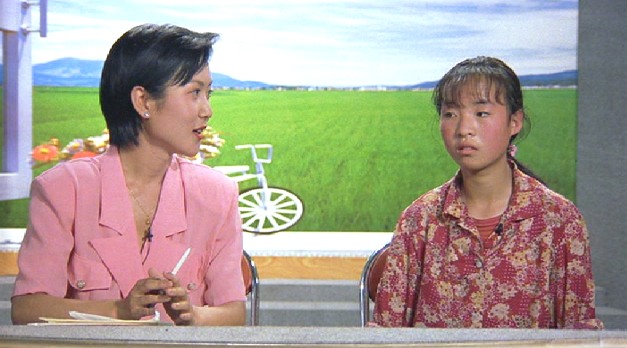
I liked the movie. One of the few things I didn’t like was how there were no subtitles for the interpretation of written foreign language on posters, signs what Wei wrote, etc. I couldn’t help but wonder what things said and why they elicited the reactions they did in people who read them. Also, I didn’t like how Weis’ persistence almost bordered on “dumb”. However, she is only 13 and the fact that she didn’t seem to understand what “no” meant or that the city is dangerous is only a minor circumstance I suppose. I loved the contrasts between village and city life. It was hard not to think of the village while the plot took place in the city.
Subscribe to:
Comments (Atom)